
Lulu is to be a bridesmaid at her aunt’s wedding – her dress has ‘two hundred petticoats’, she has boasted to her school friends. In the confusion of preparations for a home reception she and little brother Willy are banished to the front room where she unfortunately eats many of the Easter treats she has brought with her.
This page is part of the four page fever dream that her chocolate binge inspires in Lulu, sleeping on the sofa in the dark. The chocolate sea literally swamps the children as they float and then surf on a biscuit; the family are waiting for them on the golden sand as the reality of Lulu’s night nausea causes the dream to fade like foam on that shore. As well as providing the setup for Lulu being left alone the following day for further adventures, Simmonds is showing the reader what elements of illustration and text to pay attention to, and how, for the rest of the story.
I heard and absorbed from other children’s librarians, early on in my career, that “comics” were either despised or dismissed as suitable only for ‘reluctant readers’. The exceptions were Asterix and Tintin, on the shelf of my school library and each subsequent one I worked in : Raymond Briggs’ Father Christmas was embraced when it won the Kate Greenaway award, and the Ahlbergs’ early works like The Old Joke Book and The Brick Street Boys were acceptable.
This was a source of secret shame to me because, like Simmonds herself, I grew up reading comic strips wherever I found them, even if only half understood. (It had to be explained to me what a chimney sweep was.)

. My dad’s bookcase included Jules Feiffer’s Sick Sick Sick and a book of motoring cartoons by Brockbank called Round the Bend. I knew they weren’t the same content as printed in my English weekly, Princess Tina, but devoured them anyway.
Simmonds describes her own childhood comic reading in Paul Gravett’s biography : ‘I liked how you can voyage around the page.’
I’m utterly convinced that reading this variety of graphic styles taught me to examine every part of a picture, using the accompanying text as a guide – when it seemed to directly contradict the image, that was an invitation to look, and look again. A wonderful contemporary artist called Aśka says this better than I ever could : check out her website.
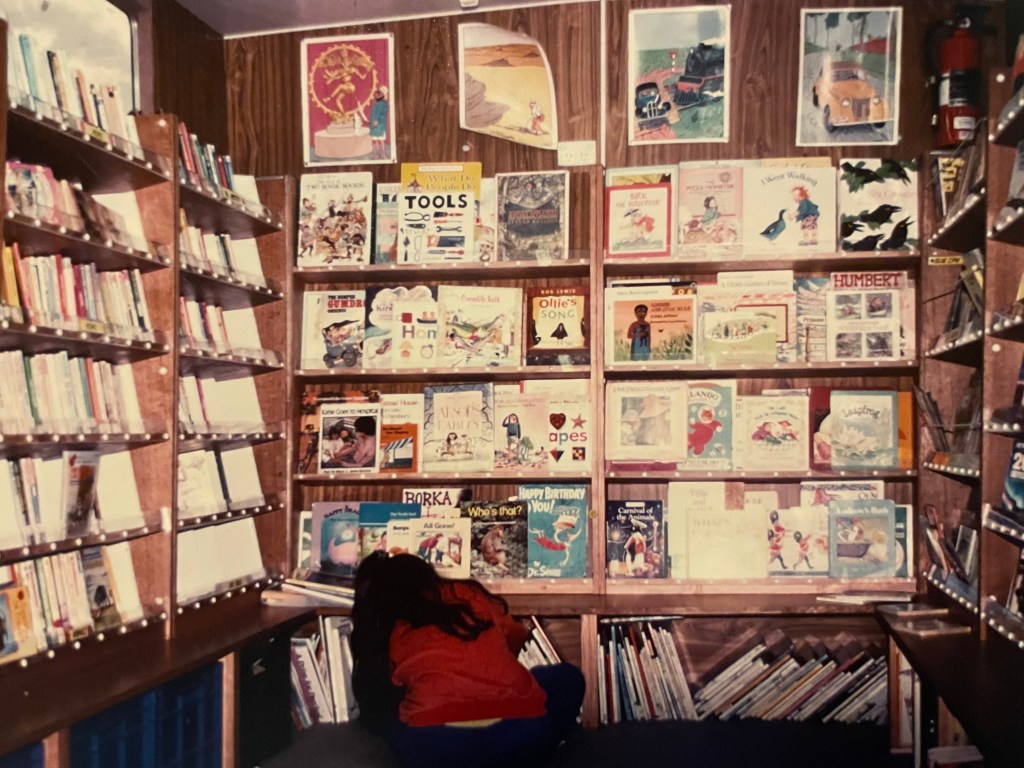
It was during this coming decade that graphic novels for adults and children would gain in status, and shelf space within libraries. I’d left the Titanic behind in Ballarat and moved to Moonee Valley Regional Libraries, and back to the big smoke of Melbourne. A combination of city and country services delivered in various ways. Here’s a picture I took (with her permission) of a young reader on board the Broady bookmobile, with that scamp Tintin as wall art.
In the future, The Chocolate Wedding became a favourite of Ms May, and Big Bob wouldn’t have hesitated to eat the bride.
 40 Years of Picture Books