‘The washerwomen never went back to work for Mr Balthazar Tight. They married the woodcutters, who built them some new log huts to live in. and after that, people who travelled along the mountain path would see them, all happily washing and woodcutting and having the time of their lives.’
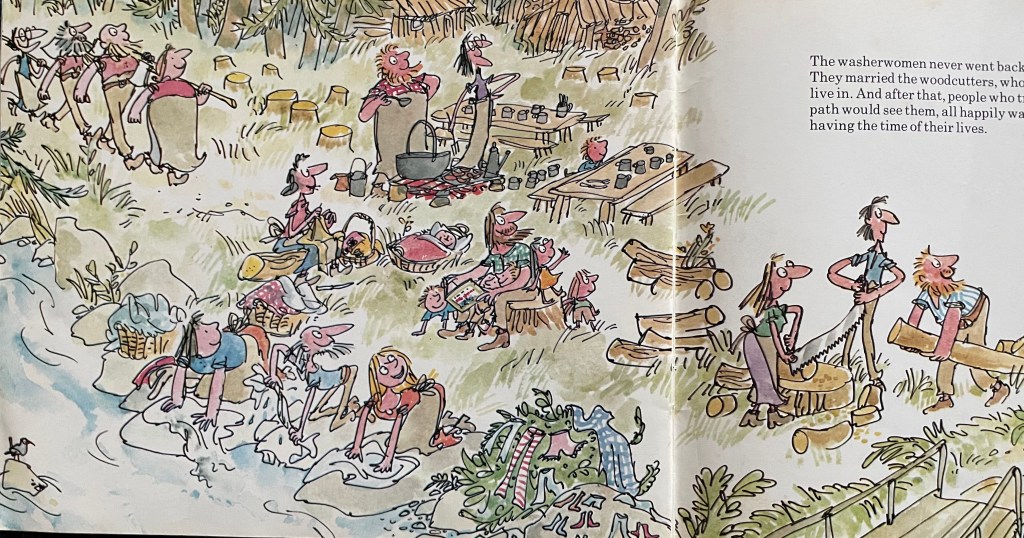
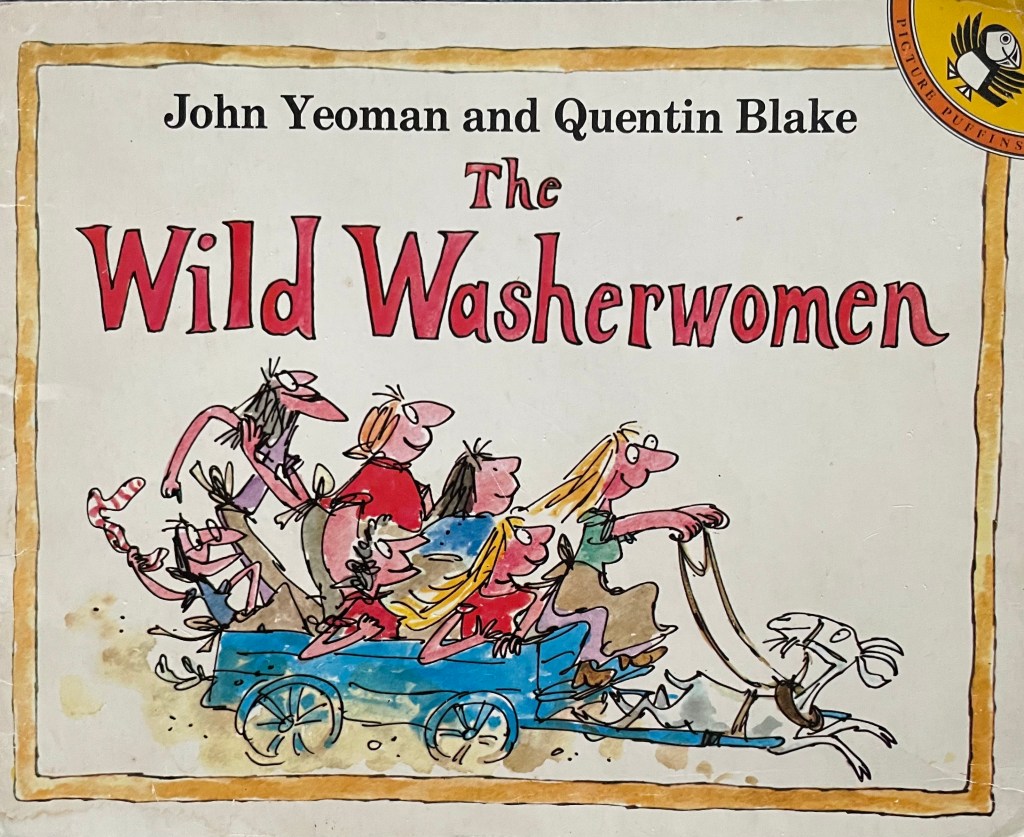
Blake describes John Yeoman, who wrote this book, as ‘my oldest friend and collaborator.’ Yeoman’s texts, folk-inspired tales, were the perfect set up for Blake’s flights of imagination as they were published throughout the 1970s. The complete harmony of the happy unions that resulted from the washerwomen’s rampage is in this delightful doublespread.
One of my childhood reading fetishes was trying to decipher what was on a cover that a character was holding: in this example, the woodcutter’s audience are enjoying the book they’re pictured in.
When I looked at the Brighton library’s copy of Roald Dahl’s Charlie and the Chocolate Factory during this year, the illustrations were by Faith Jaques – their collaboration began with The Enormous Crocodile in 1978. Blake also worked with another author I love, Russell Hoban, during this period.
His delectable solo creation, Mister Magnolia, would be published in 1980.
I had left my job at St Kilda, and Melbourne, and moved interstate for Love. Alas, he was not the woodcutter of my dreams, so I returned. I worked in a tertiary college library for long enough to start detesting emptying photocopy machines, and then got another children’s assistant position – at Brighton Library.
My family lived in East Brighton when I was 12 – 14, and the library had been a long walk down Bay Street. My best friend and I would walk there in the school holidays, taking our time and calling in at op shops on the way. The building is now known as Higginbotham Hall.

In the intervening years, the library had moved into the old Town Hall in Wilson Street. As with the Bay Street building, the children’s library was on the upper storey (and no, there wasn’t a lift.) Not only were there my childhood memories of the books strong – in many cases, they were the same copies I had borrowed. It was total affirmation that I was where I wanted to be.
I was so happy to be back among children and families. At St Kilda, the high turnover of rental properties combined with the area being the first place of residence for new arrivals to Australia meant that it was hard to sustain relationships with individuals. A local primary school teacher told me that at the end of a school year, she might still have only 10% of the students who had enrolled at the start. Brighton was different and I made friends with many small people. One former 8-year-old, his mum and I are still friends today.
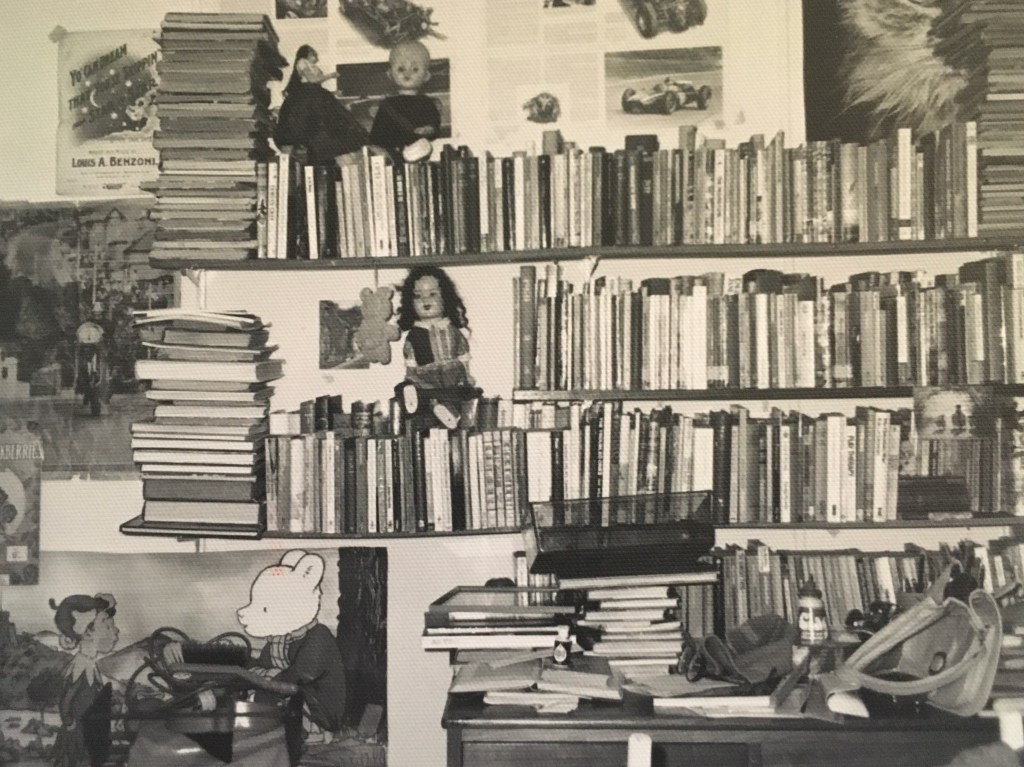
Also by this year, my personal library was extensive. Years of buying in op shops, church fetes, and new books with most of my meagre salary gave me a huge collection, most of which I meant to read someday.
Here they are, when I had returned home and moved into my dad’s workshop – they were his GP posters – and both parents avidly encouraged me to find another share house.
A new decade beckoned – with it, the beginnings of the work I was meant to do and a burst of bright publishing talent for babies and toddlers.
 40 Years of Picture Books