This is the way the baby reads
Touch, point, see!
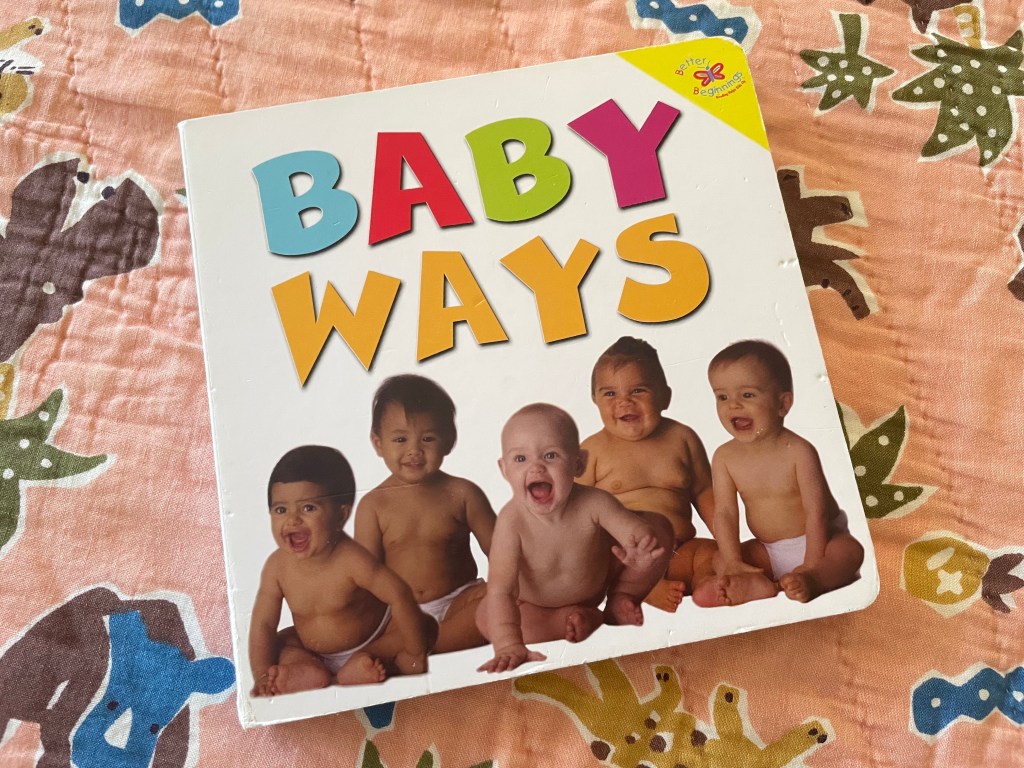
Here is a mother describing her son’s first encounter with Baby Ways, to a researcher from Edith Cowan University.
I thought it was fantastic. First of all you had every colour in there, you had every
size of baby in that some were a bit skinny, some were real plump. They
all had happy faces. They were all doing something that was naturally a baby and
they aIl looked at you…whoever did the photography was superb…the fact that my
son actually sat on my lap for the whole minute and a half and just flicked through
the faces, flicked through all of them and when he got to the end he just held it and
giggled and laughed at himself (looking at the mirror) so I thought that was a
really good first session.
When Better Beginnings Family Literacy Program was piloted in Western Australia in 2004, the first gift books for babies were chosen from the limited range imported from the US and UK at the time. It’s hard to remember when there were so few board books.
While the imported books were valued by the families who received them, the
diversity of WA babies was not fully represented.
The gift book, like the program itself, could never be ‘one size fits all’ but there
was a definite need for one title to anchor the program. With close to 30,000
babies born in the state each year, a guaranteed supply of the same title in
quantity was vital.
Additionally, there was very limited funding for the program in the early days of its development. Local governments were encouraged to buy into the program by nominally ‘purchasing’ the book so the more affordable this could be, the better.
Nola Allen and I, as part of the foundation Better Beginnings team, set about creating a board book that would address each of these needs.
Magabala Press produced Australian Babies in 2005 as the first trade title which
featured photographs of Western Australian babies. Its Broome vibe is conveyed as a
wordless book and we felt the definite need for some text to support parents in enjoying reading aloud from birth.
Which books inspired us in thinking about what we wanted to make in a book to
reach all children?

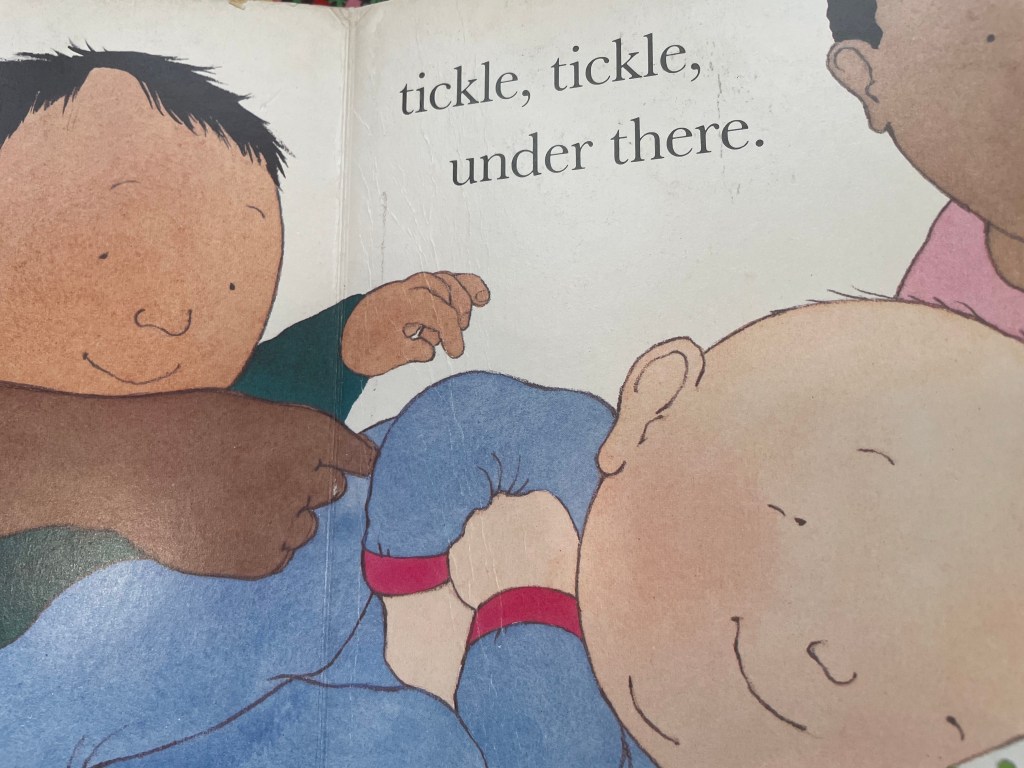
We could not get past Helen Oxenbury’s superb baby books, published in the
mid 1990s. Her melon-headed baby navigates its small world in a series of
domestic adventures, regarding everything seriously from a nine-to-12 month-old
baby’s perspective.Whether busily eating, toddling or sitting on the potty, babies
could see themselves in these books.
This firmed our resolve that we wanted a simple text which traced a baby’s daily
activities. We also wanted images featuring babies the same age as the potential readership – between eight and twelve months old.
Respected children’s editor from Fremantle Press, Cate Sutherland, was brought
in to oversee the project and our collaborative efforts were scaffolded by her
experience. It was Cate who commissioned noted WA photographer Frances
Andrijich to take the babies’ pictures. She also mentored us through our rough
ideas and rhyming scribbles to a brief which detailed what the babies would
need to be doing in those pictures.
Where to source the babies?
Partnership with Health is essential to the delivery of Better Beginnings. The excellent community child health nurse at Mirrabooka accepted the challenge of selecting fifteen babies for an action-packed photo shoot over one day. They had to be able to sit up and to do the activities we wanted pictured – eating, crawling, holding a book – and be easygoing enough to withstand being undressed to terrycloth pants and then coaxed into posing on a large table – with parental guiding hands just out of shot.
On the day of the shoot at Mirrabooka Community Health Centre as the babies
came in to be photographed, we asked the nurse how she had chosen them. Well,
she said, I put them down on the floor. If they crawled off too quickly, they didn’t
make it.
The babies came in two by two throughout the day, and we could see our sparse
text being expanded in new and delightful ways, following their different
personalities and antics. Frances Andrijich took many wonderful photographs
which we had to choose from, and we continued to further refine the text right up
until publication.
Professor Fiona Stanley launched the book in the Mirrabooka Library in late 2006, and since then over 1,000,000 copies have gone into Western Australian hearts and homes. We even produced a big book for group sharing at Baby Rhyme Time.
Baby Ways was produced in a Braille edition, in partnership with VisAbilityWA and Fremantle Press and distributed in 2018.
2022 has been a landmark year for Baby Ways with two bilingual editions featuring Indigenous languages spoken in Western Australia.
Noongar language is spoken throughout the south-west of Western Australia. This edition of the book Maawit Mart was launched in June 2022 : here are Fran and David sharing it in Noongar and English with families at Kwinana. All libraries in the South West have copies to borrow, like this one I shared at rhyme time in Mandurah Library last week.

A second edition, this time in Yawuru language and English, was launched in Broome. Yawuru is one of the dozens of Indigenous languages spoken in the Kimberley region of Western Australia. Nyamangarru Jalygurr is a tremendous new edition.

I’m beyond proud of the part I played in bringing this book into the world. I left the program in 2012 to return to Melbourne to live, and Ms May came with me to pursue her artistic journey.
In late 2025, Baby Ways was re-published by SLWA in a new edition. Frances Andrijich took fresh portraits of children from the City of Canning and Baby Ways is ready for the next twenty years.
Without experiencing the whole process from idea to book in the hands of families, I never would have published A Construction of Cranes on my own.

 40 Years of Picture Books